
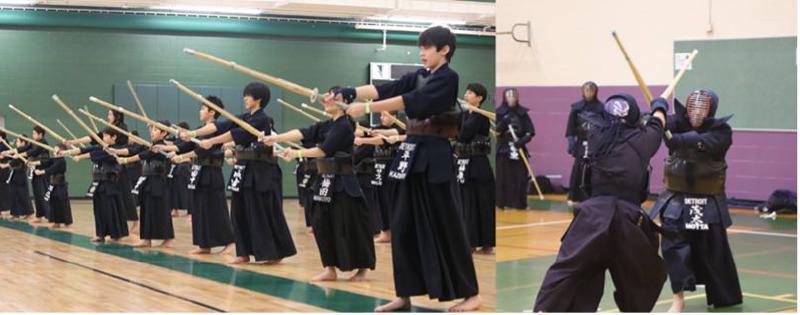
The Detroit Kendo Dojo was founded in 1996 by Yoshiteru Tagawa, with his strong dedication to spread and develop Kendo throughout the United States and the world. His motto is to develop correct Kendo through diligent practice. There are more than 60 members, from children to seniors, training at the dojo in Novi and Northville. Furthermore, many sword men and women who previously trained at this dojo are now practicing Kendo throughout North America. We hold three weekly practices, Monday, Wednesday and Saturday. We host the Annual Detroit Open Kendo Tournament in February. We are proud to be supported by many members in the Metro-Detroit community.
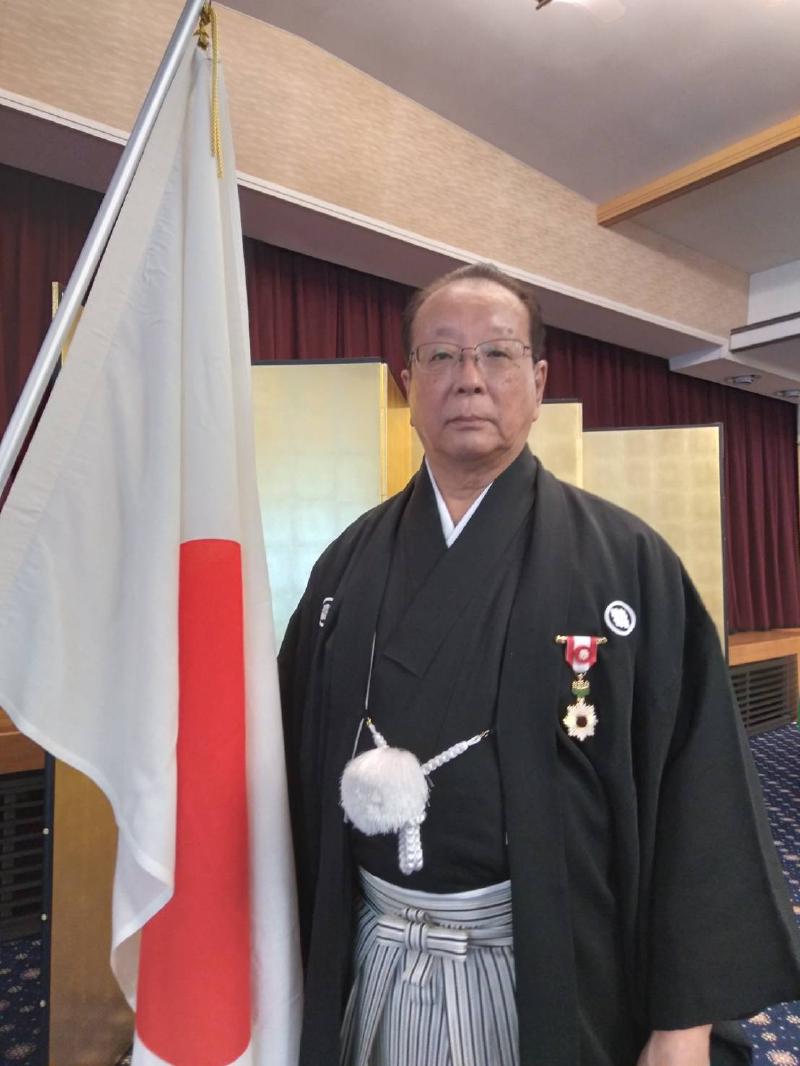
Yoshiteru Tagawa, Founder and Master Instructor #
Mr. Tagawa is a Kendo Hanshi 8th Dan, the highest rank in Kendo, and he is the only person to hold this title outside of Japan. He also serves as the Vice President of the International Kendo Federation and the Chief Executive Advisor of the All United States Kendo Federation. For his long-term contribution to the development of Kendo overseas, he was awarded the Order of the Rising Sun, Gold Rays with Rosette by His Majesty the Emperor of Japan in 2024.
The Philosophy of Kendo #
“Through the rigorous practice of Kendo, inner strength and character are developed. Such is the true path of Kendo.” Also, through the practice of Kendo, mental readiness is established. “Kendo training is to be taken very seriously and done properly. Mind and boy are cultivated through vigorous training. This will in turn bring vitality to the mind and spirit. The uniqueness of Kendo teaches us respect, discipline and faith. In order to accomplish this, we must always give our all until our powers and exhausted. In an even broader sense, one must learn through the practice of Kendo to love our country, but also to promote peace and harmony on earth.
The Ten Virtues of Kendo by Sasaburo Takano-sensei #
- A healthy body is a must. You must maintain good health and vitality in every part of your body.
- Develop a strong sprit. Your skill and spirit must be in perfect harmony. This will enable you to adapt and to cope with even the harshest of environments.
- Training is critical. Your mind, spirit, hands and feet are to combine to work as one. Practice diligently to attain this.
- Experiment and use your mind. Doing this will bring you close to enlightenment as well as improve your skill and techniques.
- Fundamental Training. Practicing basic techniques must be done properly. Posture, stance, grip, line of sight, footwork, attacking are critical. If you do not take these seriously, your skills will not evolve.
- Always train with a focused spirit. Your spirit controls your body. Whether it is during practice or tournaments, always maintain a focused spirit and put forth your best effort.
- Train with passion from beginning to end. You will encounter many hardships and suffering. Kendo is a lifelong commitment. If you train without putting forth your best effort, you will not reap all of the benefit of Kendo.
- Do not become conceited or overconfident. Whether it is in our Kendo, your education, or even in your career, arrogance is the root of all failure. This kind of attitude is the greatest detriment to your training.
- Maintain purity in your soul. Anger, deception, selfishness are enemies to your training. The path of Kendo is to train seriously in order to build character.
- Live the way you train. Do not separate what you learned in Kendo from your everyday life. It is unfortunate if this happens. The keeping the path of Kendo and the path of life as one, you will benefit greatly.
The Twelve Virtues of Kendo for Youth Kenshi at the Dojo #
- Practice proper kendo etiquette.
- Offer greetings clearly and in a loud voice.
- Offer proper greetings at home and school as well.
- Follow instructions from sensei and guardians.
- Neatly arrange your shoes and clothes.
- Properly wear and neatly organize kendo uniforms, hakama, and protective gear (bogu).
- Sit with proper posture and perform silent meditation (Mokuso).
- Refrain from idle chatter during practice (focus on the keiko)
- Practice with loud voice kiai.
- Practice the kendo fundamentals thoroughly and set them in your body.
- Take good care of possessions.
- Get along well with friends (do not engage in bullying or discrimination)