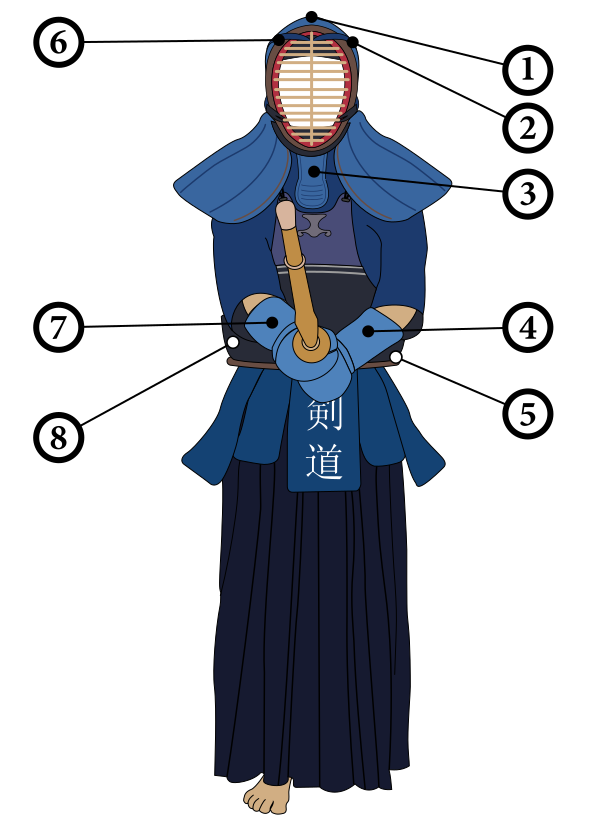
Kendo is a Japanese martial art where participants fight with bamboo swords (called shinai) while wearing protective gear. There are four valid targets in Kendo:
Striking one of these targets with the right part of the sword, a loud voice and a correct stance will earn a point in competetion. We study for many years to get our Kendo practice to be strong and graceful.
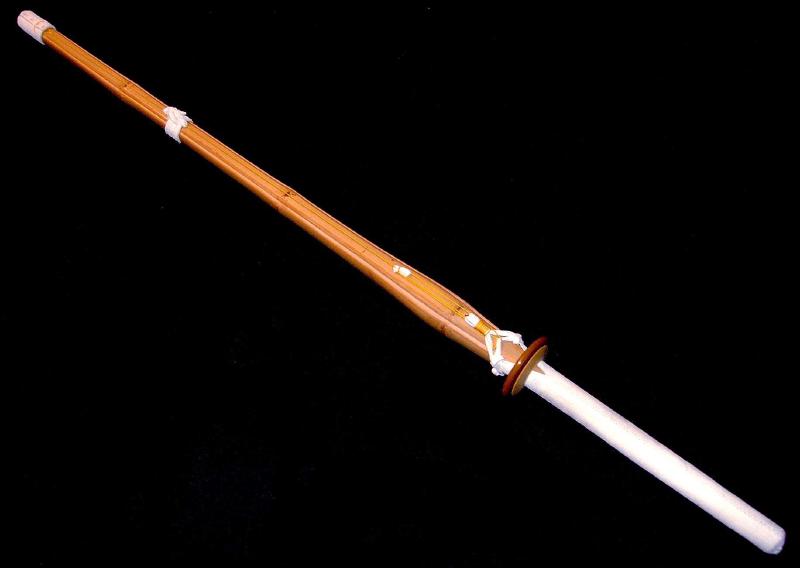
A shinai (竹刀 lit. bamboo sword) is a specially-constructed sword that is used in Kendo. It it usually constructed out of four interlocking bamboo slats and bound together using a wrapper of leather or synthetic material. The shinai represents a traditional metal katana blade. The University of Michigan Kendo Club has a great article about the anatomy of a shinai.
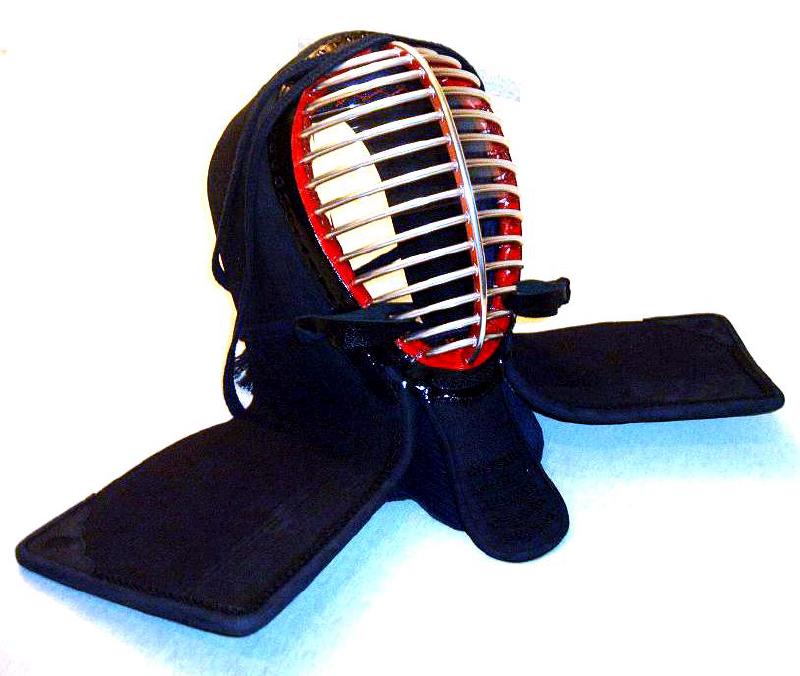
The head guard is called men (面 lit. face/front) and is the distinctive equipment for Kendo. It consists of a metal face guard, a throat protector and shoulder guards. To attach the men you loop the strings around your head and tie a knot at the back of your head.
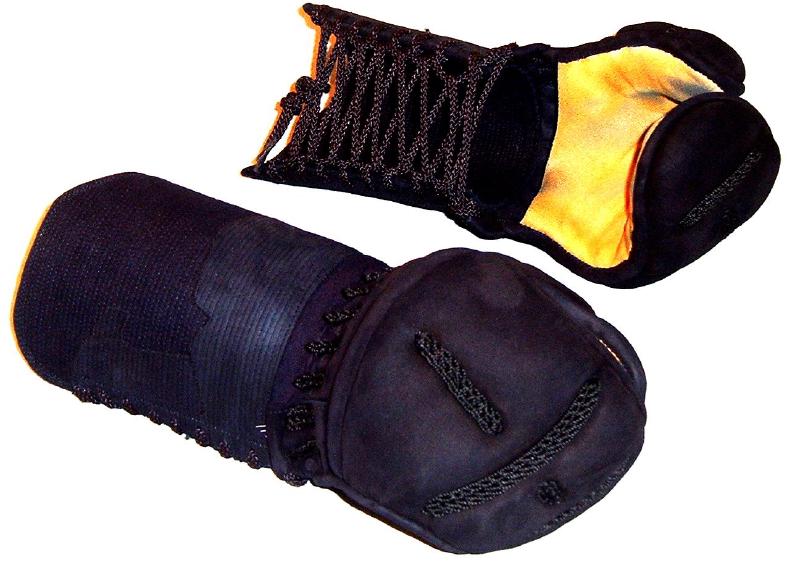
Kote (小手 lit. wrist) are guards that we wear to protect our hands and wrists. The proper point to strike is the top of the wrist/forearm but some techniques require getting in close with the opponent so having a hand guard is an extra precaution. The area where the fingers go is not separated for each finger which also helps to hold the shinai.
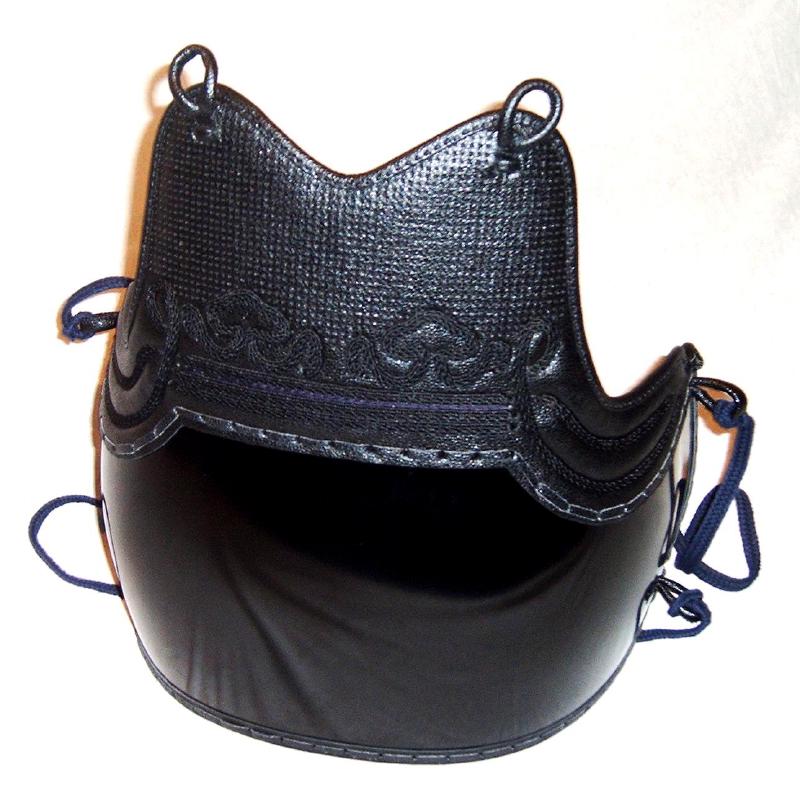
Dou (胴 lit. torso/body) is the name of the protector we attach to our stomach and chest area. This is a rigid, usually plastic or bamboo constructed guard that opponents try to strike from the sides. The katana is used to slice so the motion to hit dou starts at the side of the body and goes across the front.
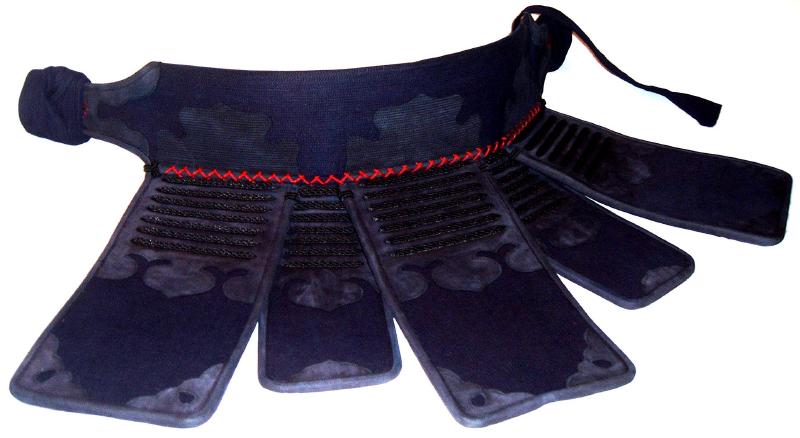
Tare (垂 lit. midsection/loin) is the guard for our lower body. There are no valid strikes below the waist in Kendo but this guard helps to absorb impact if the opponent misses dou. It also holds our name tag (called Zekken or Nafuda (ゼッケン、名札)) showing our dojo name and our information.
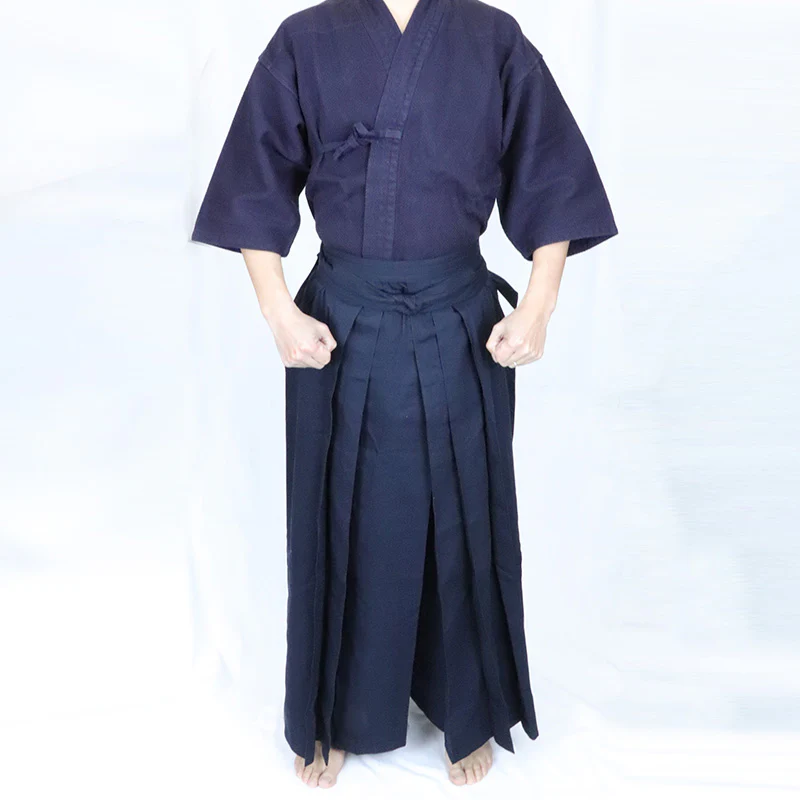
Kendogi and Hakama (剣道着 / 袴 lit. Kendo Uniform / Formal divided skirt) are the clothes worn by all participants in Kendo. They are generally made from cotton but technical fabric versions are available. Some higher quality versions are dyed with traditional indigo and need to be washed in cold water separately from other clothes so they don’t stain with the natural dye. Learning to tie the gi and hakama takes some practice and we will show you the best way at our dojo.
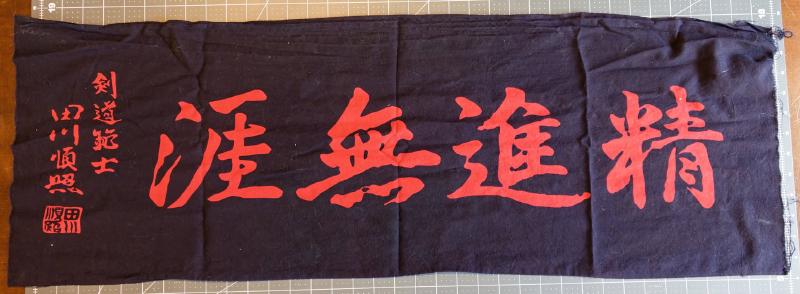
A tenugui (手ぬぐい lit hand towel) is used to cover our heads underneath the men protector. It provides some cusion and also works to absorb sweat. Kendo tenugui are much larger than a normal hand towel and are about 3 feet by 1 foot. They usually have a teaching written on them that we read to ourselves before putting them on but there are also versions with images or patterns. This is something you choose for yourself and you will generally need to have a few.
The Kingston Kendo Club has generously created resources for both kendo beginners and advanced practitioners. Both of the documents below are excellent resources and are freely distributed under the Creative Commons CC BY-NC-ND 4.0 license.
The documents are for reference only and are not official instruction from the Detroit Kendo Dojo. In the event of differences in instruction between the documents and the instruction at Detroit Kendo Dojo events always defer to the sensei at the dojo.
There are ranks in Kendo ranging from the first 6-KYU throught the highest 8-DAN. After earning the 1-DAN rank applicants must wait and train more between tests for the next rank. The formula for the waiting period is: Previous DAN Rank * YEAR(s) For example, if you earn the 2-DAN rank you need to wait 2 years to test for the next rank, 3-DAN.
Kendo instruction is provided in English and Japanese but there are many terms that may not be familiar to you.